Kilimanjaro routes
Six main routes lead to Uhuru Peak, 5,895 m and the highest point in Africa, and every one of them needs a licensed guide. How long each takes, where it starts and comes down, and your own climb drawn as a print.
Kilimanjaro at a glance
- Summit
- Uhuru Peak on Kibo, 5,895 m (19,341 ft), the highest point in Africa
- Main routes
- Six: Marangu, Machame, Lemosho, Rongai, Umbwe and the Northern Circuit
- Most popular
- The Machame Route, with about 40% of climbers
- Hardest
- The Umbwe Route, short, steep and direct
- Guides
- Compulsory: every group climbs with a registered guide through a licensed operator
- Time needed
- 5 to 9 days, depending on the route
The routes up Kilimanjaro
Marangu Route
72 km (45 miles) there and back · 5 to 6 days · starts at Marangu Gate, the park headquarters
The only route with huts: you sleep at Mandara, Horombo and Kibo instead of in a tent, then come back down the same way. It has the shortest itinerary, which means the least time to get used to the altitude, and fewer people reach the top from it.
Machame Route
62 km (39 miles) gate to gate, one way · 6 to 7 days · starts at Machame Gate, 1,640 m (5,381 ft) · down the Mweka Route
The busiest way up, used by about four in ten climbers, camping all the way. It climbs from the south through the forest, the views change every day, and the camps fill up in the dry months.
Lemosho Route
70 km (43 miles) gate to gate, one way · 7 to 8 days · starts at Lemosho Gate, 2,100 m (6,890 ft) · down the Mweka Route
Starts far out on the west side, near the Londorosi gate, and joins the southern circuit for the summit. The extra days help you acclimatise, and its summit success rate is high.
Rongai Route
73 km (45 miles) gate to gate, one way · 6 to 7 days · starts at Rongai Gate on the north side · down the Marangu Route
The only route from the north, close to the Kenyan border, and quieter than the southern routes. A gentler climb with less up and down between camps, then you come down the other side on the Marangu Route.
Umbwe Route
53 km (33 miles) gate to gate, one way · 5 to 6 days · starts at Umbwe Gate · down the Mweka Route
Short, steep and direct from the south, and used by about 2% of climbers. It gains height fast and leaves little time to acclimatise, so it's not one for a first time at altitude.
Northern Circuit
98 km (61 miles) gate to gate, one way · 9 to 10 days · starts at Lemosho Gate · down the Mweka Route
The longest way round. It starts like the Lemosho, then circles the quiet northern slopes before the summit. All those days are good for acclimatisation, and Follow Alice puts its summit success at roughly 90%.
Distances and days from Follow Alice, gates, rules, fees and seasons from Tanzania National Parks (TANAPA), read October 2026. Check the forecast and book with a licensed operator.
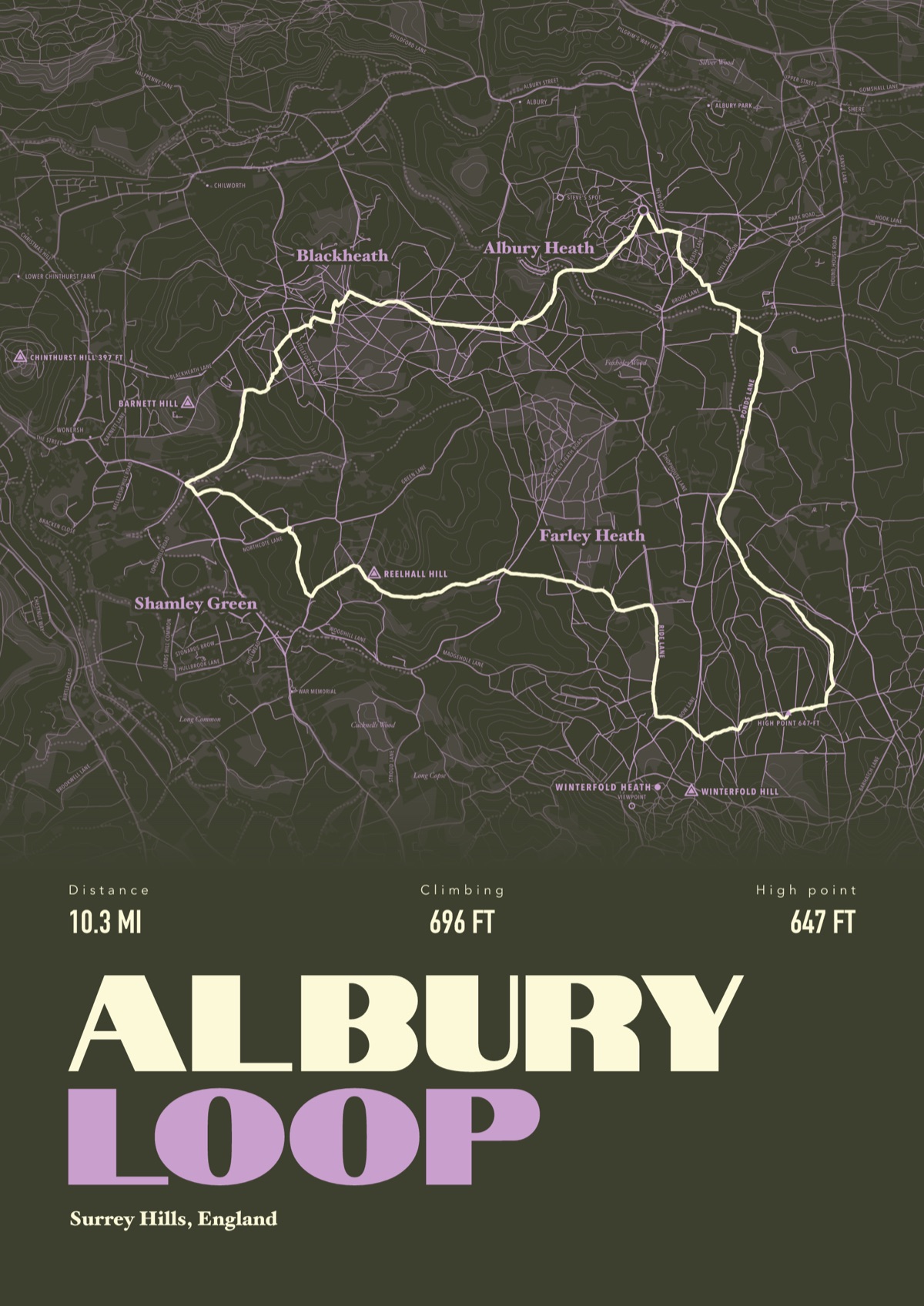
Your way up Kilimanjaro, drawn
Your own path up and down, drawn from your phone or watch onto the mountain, with the summits, lakes and villages named.
The print shown is a walk in the Surrey Hills. Yours is drawn from your own day on Kilimanjaro.
£45 unframed Launch price until 31 December
£55 from 1 January · £99 framed
Free delivery to the UK, US, Canada, Australia and New Zealand
Good questions
Do you need a guide to climb Kilimanjaro?
Yes. Under the park's mountain regulations every climbing group goes with a registered guide, the park deals only with licensed tour operators, and everyone, guides and porters included, signs in at the gate before climbing.
Which Kilimanjaro route has the best success rate?
The longer ones. Lemosho and the Northern Circuit give your body more days to adjust, and Follow Alice puts Northern Circuit success at roughly 90%. Marangu and Umbwe, the quickest, have the lowest.
How many days does it take to climb Kilimanjaro?
TANAPA says 5 to 9 days depending on the route, and no fewer than five days up and down, so you have time to acclimatise.
When is the best time to climb Kilimanjaro?
In the dry seasons: late June to September, and December to early March, when nights are cold and days are clear. The long rains run from March to May and the short rains through October and November.
How much are the Kilimanjaro park fees?
TANAPA's October 2024 tariff guide lists a conservation fee of US$70 a day for non-residents aged 16 and over, plus US$50 a night to camp or US$60 a night in the Marangu huts, and a US$20 rescue fee per trip. Children under 10 are not allowed above 3,700 m.
Can I get a print of my own Kilimanjaro hike?
Yes. Send the file from your phone or watch, Strava, Komoot or any app that exports GPX, and we draw your route up the mountain with the gates, camps and Uhuru Peak named.
You walked it, now frame it
Send the file from your phone or watch, pick the colours, and we'll take it from there
Make yours